Watch a city from afar, from over a lighthouse or a distant hillock – the entirety taken in a glance without the details like an acquaintance who allows you to gaze at her from your apartment before she turns around the corner. Arrays of light and movement abstracted into festoons of vaguely familiar aesthetics lining and defining the contours of what might otherwise be a dark lump on the horizon. The skyline and sounds bear a calming incongruity which allows us to know just enough to like these Hong Kongs and Torontos and Bombays but without divulging details which might make us judge them. To not know is to retain the hope of continuing to like someone. Cities were meant to be seen from a distance, either psychological or spatial.
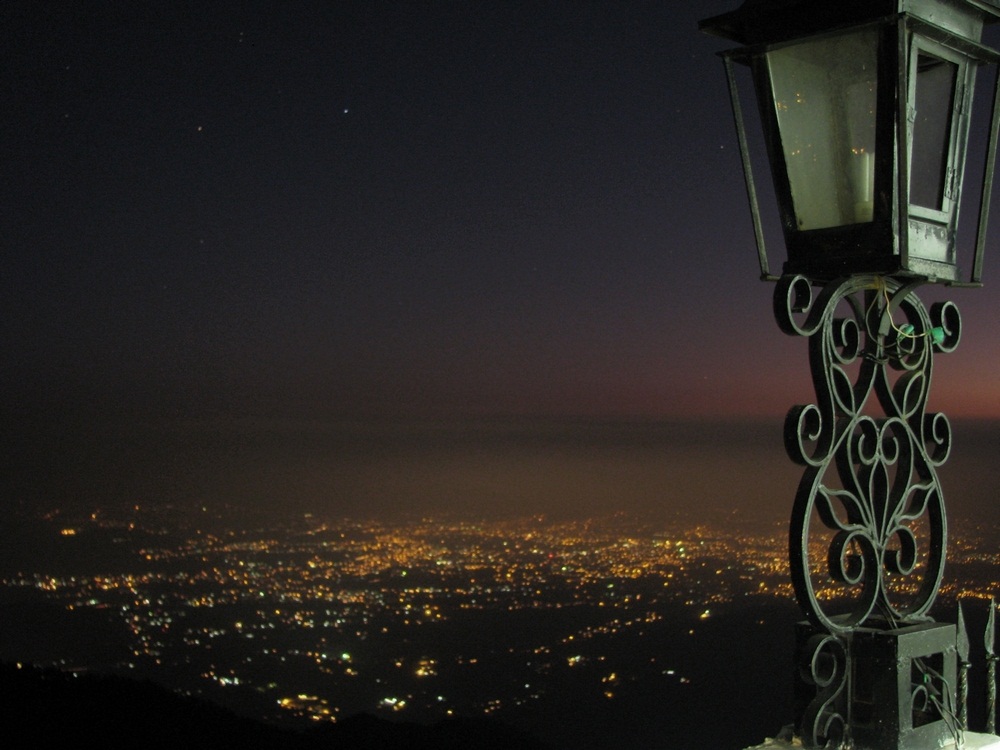
 Like A Feather...
This post reminds me of this photographer who goes to great lengths like hiring a navy helicopter etc just to get aerial, top down look on cities. He says that his cynicism abates when the ugly details smudge to the eye of heights! Great photographs – check out his book Above Bombay by Jehangir Sorabjee.
For myself, I prefer the complete and unvarnished truth. Disgusting or otherwise.
Do you mean that those truths are not welcome to the visitor that goes to the roads and streets of the city that one saw from atop a fort or mountain? Do some truths harbor hate? Then what is love? When they all clang out “Truth is love”? If all the awareness and the consciousness in the world is truth, is all awareness, and if all awareness also has a subset of hate, all of the hate then, is also love?